Independence Blue Cross | Healthcare, GenAI
GenAI Customer Service Tool
for Call Center Agents
Call center agents were scrambling across multiple systems during every call, drowning in dense medical jargon. I led research that uncovered trust as the core barrier: agents didn't believe AI outputs where accuracy is non-negotiable. Pivoted from member-facing patterns that failed testing to agent-specific screens.
- What I Owned
- Directed user research and design of agent experience, design pivot strategy, ML partnership on trust/explainability
- Constraints
- Responsible AI governance, healthcare compliance, agent distrust of AI outputs, hallucination issues, cross-team coordination (UX, Data Science, API, Engineering)
- Artifacts
- Agent research synthesis, agent-specific interaction design, trust/explainability patterns, feedback flow redesign


$450K
Projected Savings (2yr)
90%
Agent Satisfaction
40+
Agents in Pilot
The Challenge
System Fragmentation
Agents scrambled across multiple systems during every call with no single source of truth.
Dense Information
Medical policy information was dense jargon that took time to interpret.
Trust Deficit
Agents didn't trust AI outputs in a context where accuracy is non-negotiable.

Interviewing call center agents to understand workflow pain points
Research Insights
Research revealed what agents needed from an AI tool across three dimensions.
Feel
Supportive, truthful, limitations should be clear to the user
Function
Make information digestible, quicker access to things, be an assistant not a replacement
Inspire & Empower
Detect things for you so you are empowered to make decisions, enhance productivity
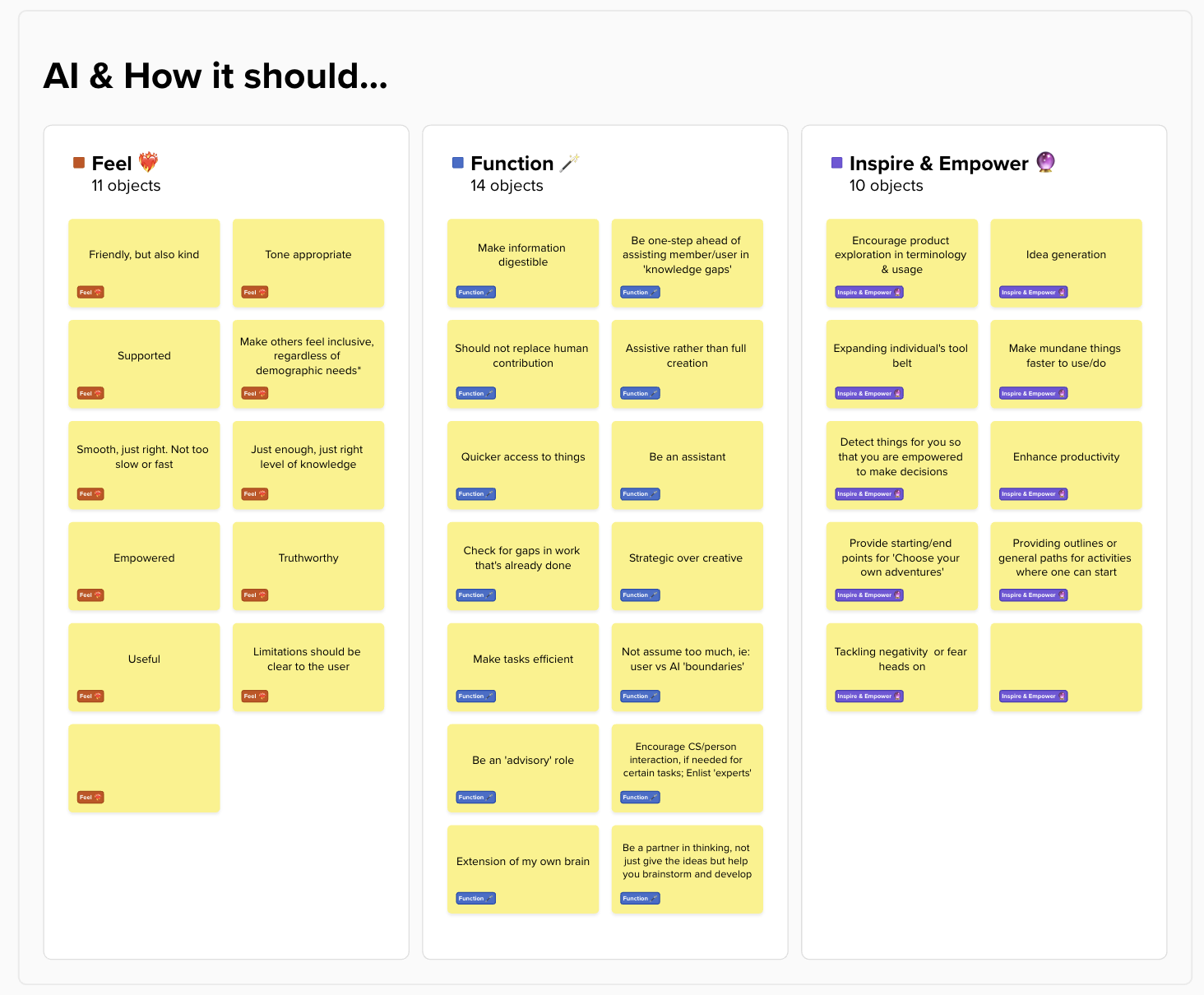
Research synthesis: what agents needed from AI
The Pivot
Stakeholders wanted to reuse member-facing chatbot. Research said otherwise.
Initial direction: reuse the existing member-facing chatbot widget to speed up pilot delivery. My research showed this wouldn't work. Agents needed:
- Context alongside responses, not hidden behind interactions
- Faster task initiation with clear entry points
- Visible answer sources for verification
I presented findings to the steering committee and recommended agent-specific screens using the existing design system for speed. Leadership approved the pivot.
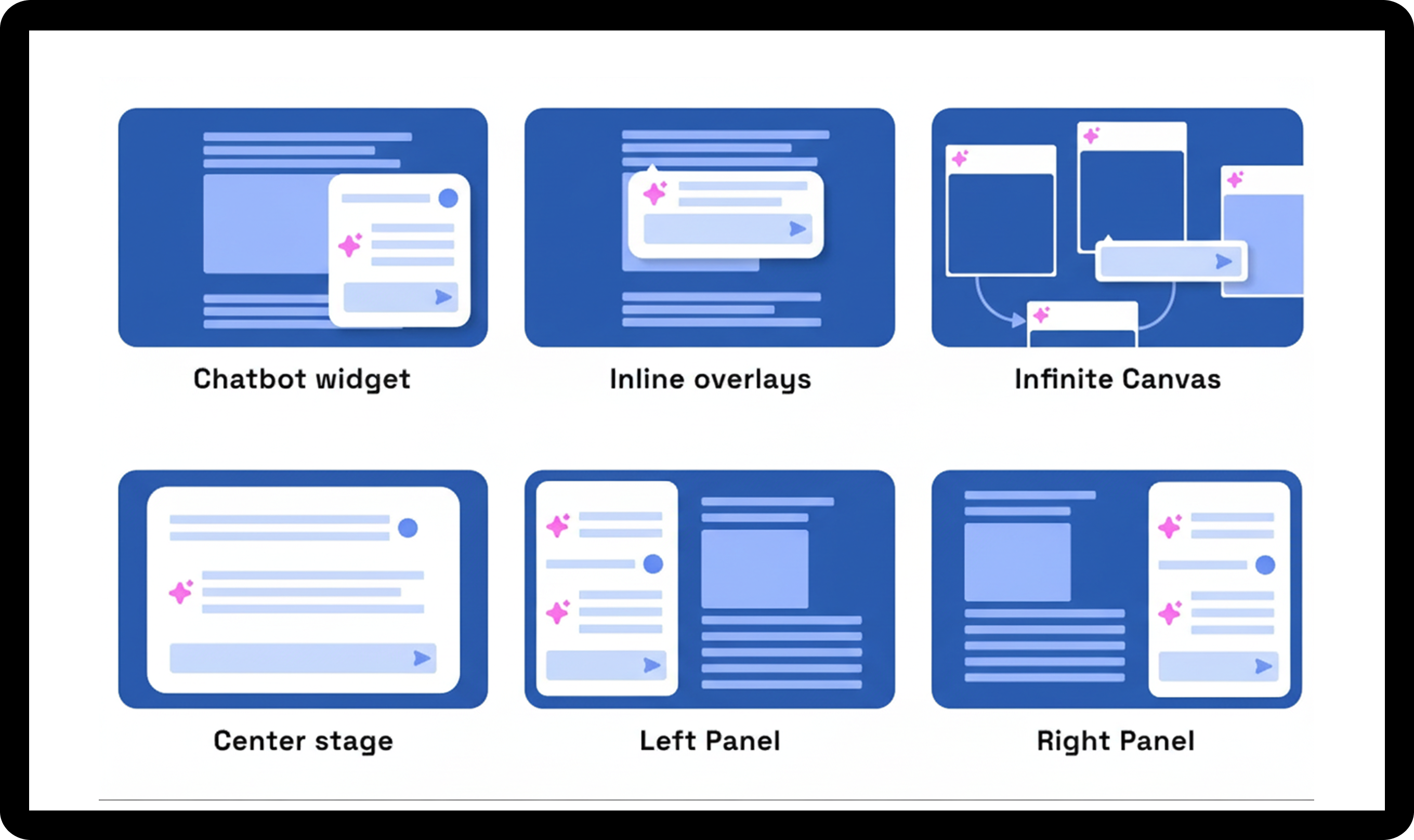
Layout exploration: from chatbot widget to dedicated agent experience
Before & After: From Fragmented to Focused
Before
- Multiple systems open
- Dense medical policy text
- No answer source visible
- Agent double-checking everything
After
- Single tool
- Plain-language response
- Context panel with source
- Trust indicator confirming AI limitations
The Solution
Two decisions that drove outcomes
Landing Experience
Agents select their question type: Benefits, Medical Policy, or Precertification. Proactive prompts reduce time to first question.
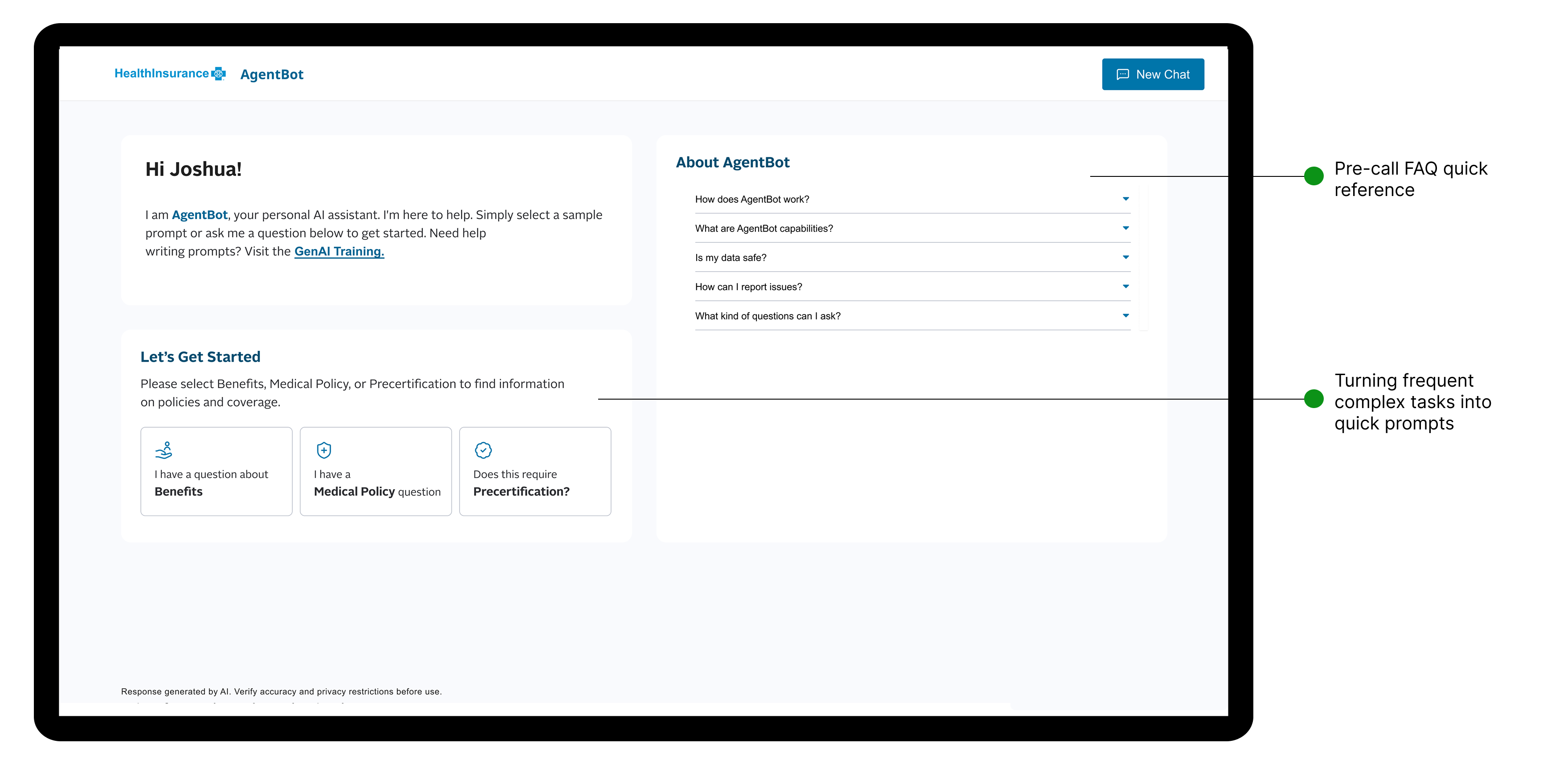
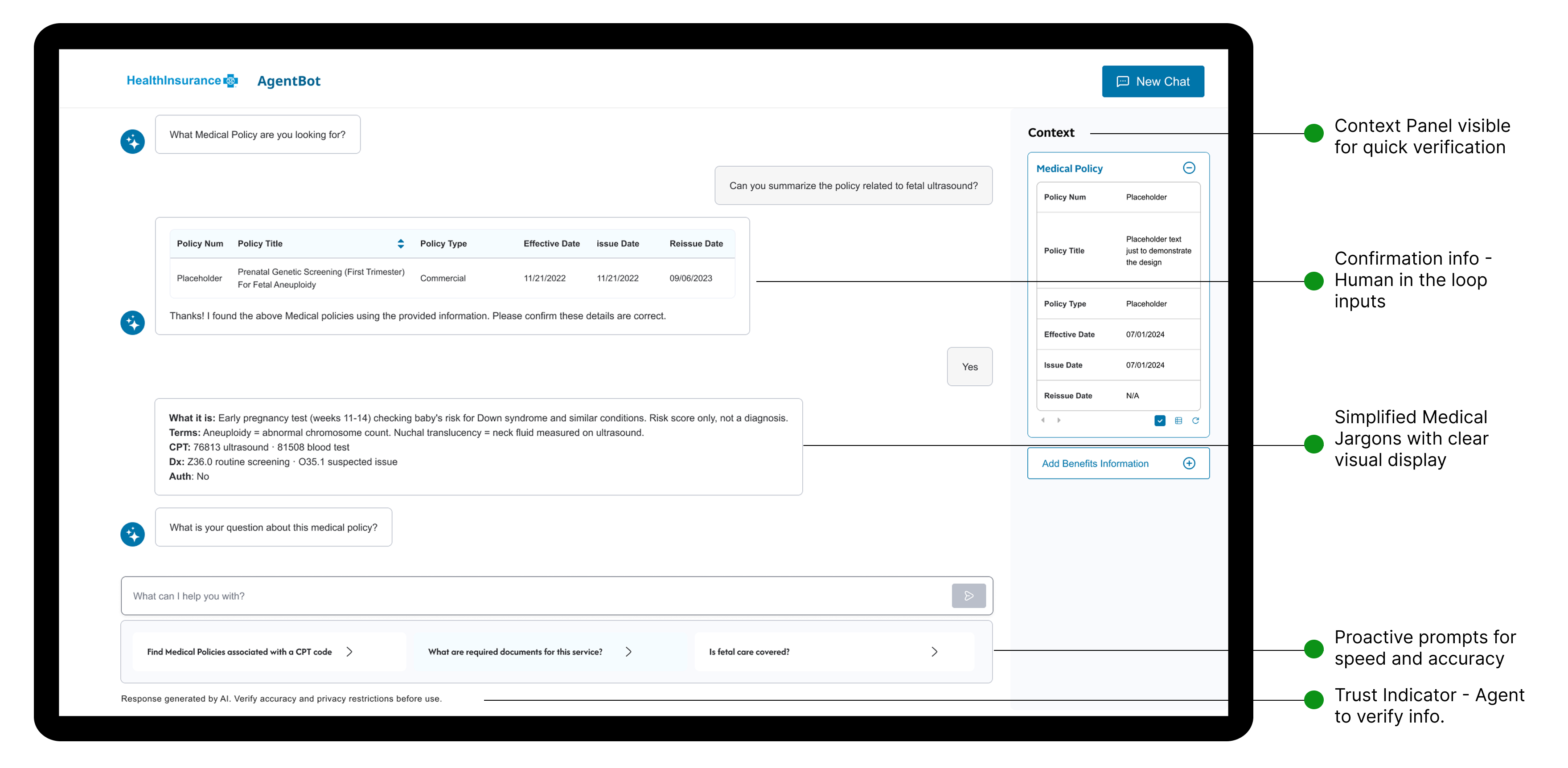
Conversation with Context
Context Panel
Shows answer source so agents can verify
→ Reduced double-checking → faster calls → $450K savings
Trust Indicator
"Response generated by AI. Verify accuracy before use."
→ Clear AI limitations → agent trust → 90% satisfaction
Proactive Prompts
Suggested questions reduce typing and time
Conversation Flow
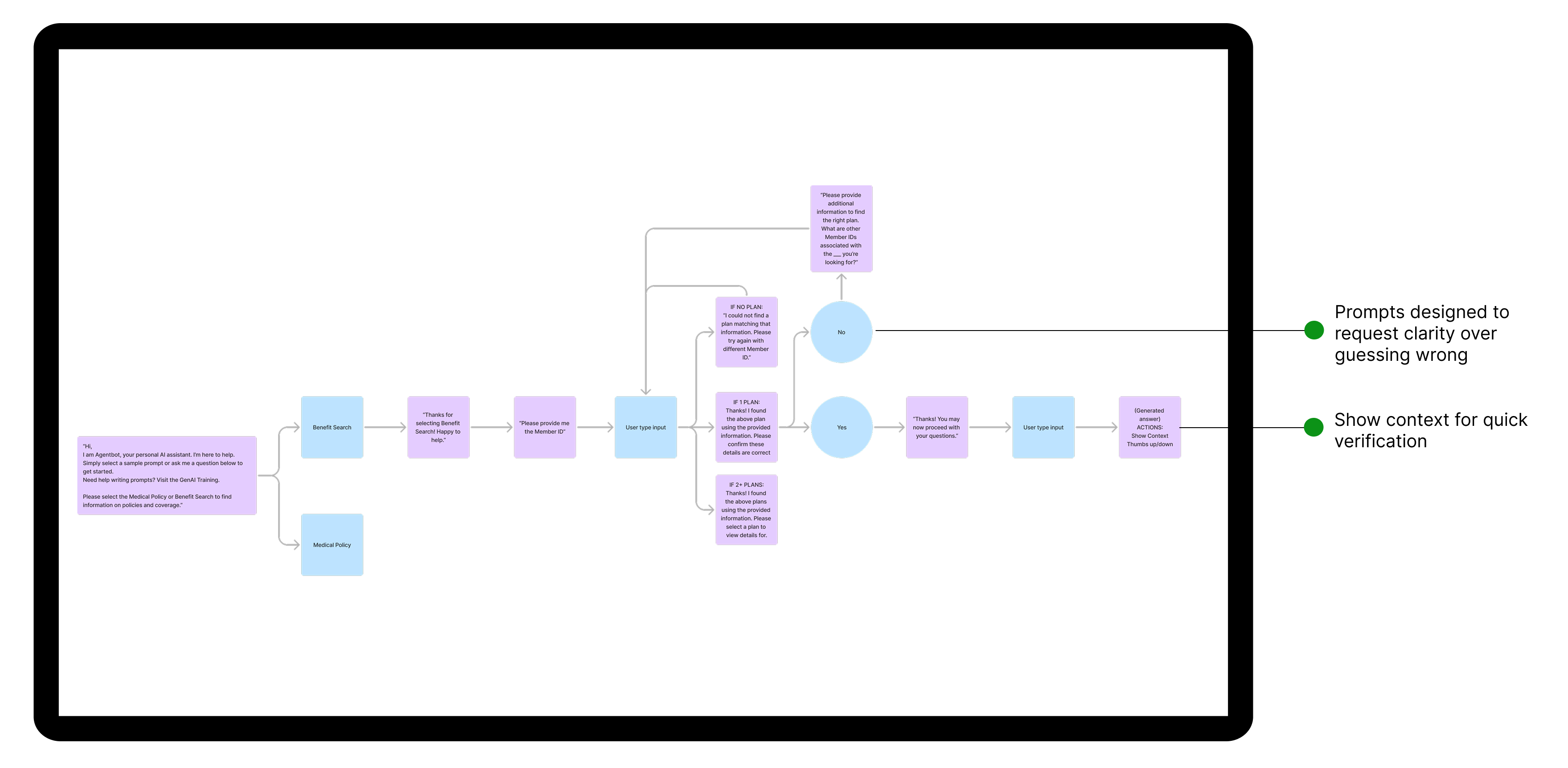
Designed logic handling multiple plan scenarios, error states, and "I don't have enough context" responses.
Partnered with ML engineers to ensure AI responds honestly when it lacks information rather than hallucinating.
Results
$450K
projected savings over 2 years
Context panel → reduced double-checking → faster calls
90%
rep satisfaction
Trust indicator → agents knew AI limitations → trusted the tool
40+
agents in pilot
Designing for trust in AI means being honest about what the AI can't do.
Next Project
Integrating AI into Design Workflow
Design Leader